
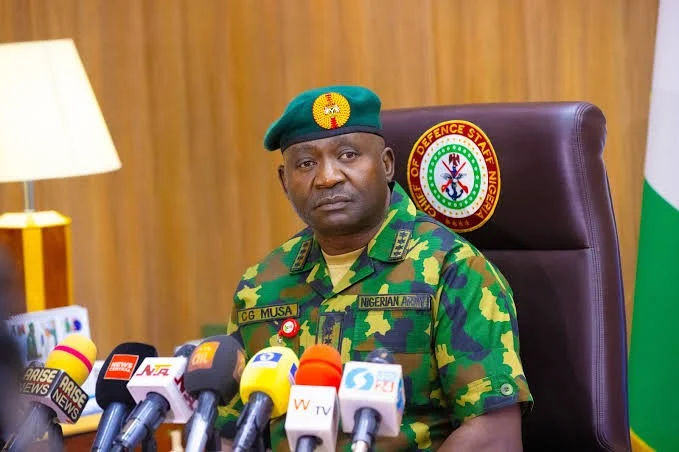
Defence Minister Links Global Conflicts to Military Equipment Shortages, Pushes Local Production
Nigeria’s Minister of Defence has raised concerns over the growing difficulty in acquiring military equipment, warning that ongoing international conflicts are affecting access to defence resources needed to strengthen national security.
Reports from a security conference in Abuja revealed that Defence Minister Christopher Musa attributed the challenge partly to continuing geopolitical tensions involving countries such as Russia, Ukraine, Israel, Iran and the United States. However, what we found out is that the discussion extended beyond weapons procurement and focused heavily on local production, data infrastructure and long-term security reforms.
Speaking at the Nigerian People’s Strategic Conference and Defence Exhibition 2026, the minister explained that global demand for military hardware has intensified competition among nations seeking access to equipment and supplies.
According to him, countries directly involved in conflict often secure production slots in advance due to stronger purchasing capacity, making procurement more difficult for other nations.
He suggested that Nigeria’s long-term response should focus on expanding domestic defence manufacturing rather than relying heavily on external suppliers.
The minister praised local innovators and indigenous defence producers, encouraging stronger institutional support and wider adoption of locally developed military solutions.
Beyond equipment shortages, Musa also highlighted another challenge affecting internal security operations — the absence of a comprehensive national database.
According to him, improved identity and information systems would significantly enhance the ability of security agencies to track criminal activity and strengthen public safety efforts.
He argued that effective policing becomes more difficult when institutions lack reliable data for tracing suspects and analysing patterns of criminal behaviour.
While acknowledging operational limitations, the minister commended the Nigerian police for continuing to deliver results under difficult conditions.
He stressed that security agencies depend heavily on cooperation from citizens and noted that intelligence gathered from communities remains essential in preventing crimes and responding effectively to threats.
Musa also expressed concern over incidents involving vandalism of public infrastructure and argued that earlier reporting by residents could help reduce such activities.
He encouraged citizens to become more active participants in supporting public safety efforts.
The minister further urged state governments to ensure that resources reaching subnational levels translate into visible development outcomes.
According to him, addressing economic hardship, unemployment and limited access to opportunities remains important for reducing conditions that often contribute to insecurity.
He also called for careful regulation of community-based security groups, warning that inadequate oversight of armed local structures could create additional risks.
During the event, lawmakers also reaffirmed support for strengthening Nigeria’s security framework through legislation and institutional reforms.
Discussions included renewed attention on decentralised policing models and ongoing constitutional amendment efforts aimed at improving governance and local security management.
Stakeholders at the conference also encouraged stronger collaboration with the private sector, arguing that businesses, technology providers and financial institutions have increasingly important roles to play in responding to evolving security challenges.
As conversations around national security continue, the event reflected growing calls for a more self-reliant, coordinated and technology-driven approach to protecting lives and supporting development across Nigeria.