
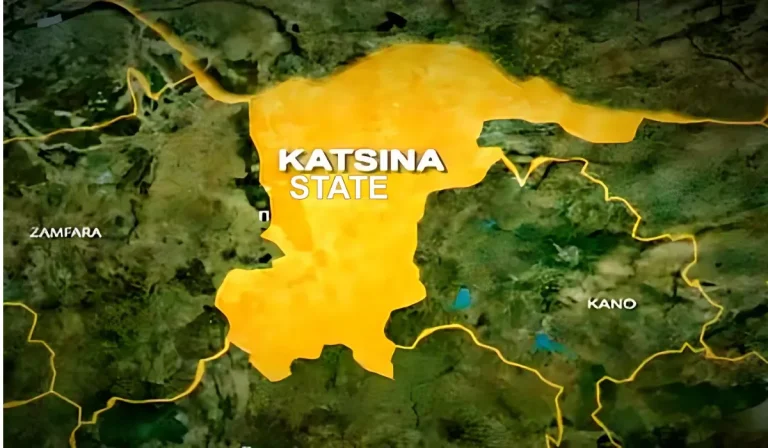
**UNICEF, UK Government Launch Climate-Resilient Infrastructure Project in Katsina**
The United Nations Children’s Fund (UNICEF), with support from the United Kingdom’s Foreign, Commonwealth and Development Office (FCDO), has commenced the implementation of a Climate Resilient Infrastructure for Basic Services (CRIBS) project in Katsina State.
The initiative is aimed at strengthening water, sanitation and hygiene facilities in schools and primary healthcare centres to withstand the growing impacts of climate change.
Speaking at an inception meeting in Katsina, UNICEF Water, Sanitation and Hygiene Specialist at the Kano Field Office, Uba Lawal, said the project would involve the rehabilitation and retrofitting of facilities to make them more resilient to climate-related challenges such as flooding, drought, heat stress and windstorms.
According to him, the intervention is designed to ensure the continuity of learning and healthcare services even during extreme weather conditions.
Lawal explained that about 24 locations in Katsina State have been selected for the current phase of the project, covering both schools and primary healthcare facilities.
He noted that the CRIBS project had earlier been implemented in Kano and Jigawa states, where a total of 84 facilities were upgraded under the first phase, with 55 in Kano and 29 in Jigawa.
He added that the second phase has now expanded to include Katsina, alongside additional interventions in Jigawa, following the success recorded in the initial phase.
Lawal described the impact of climate change in Katsina as severe, pointing to declining rainfall, rising temperatures, desertification, drying water sources and increasing difficulty in farming activities.
He said these environmental challenges have made adaptation and resilience efforts more urgent, stressing the need for coordinated action between development partners and government authorities.
He further noted that while UNICEF and its partners are providing technical and financial support, the sustainability of the project will depend largely on government ownership and active community participation.
According to him, awareness creation, contractor supervision and strong monitoring mechanisms will be introduced to ensure accountability and proper implementation of the project.
Lawal emphasized that government leadership is crucial for scaling up the initiative to more communities and facilities in the future.
UNICEF reaffirmed its commitment to supporting vulnerable communities and working with stakeholders to mitigate the impact of climate change, particularly on children and essential public services.