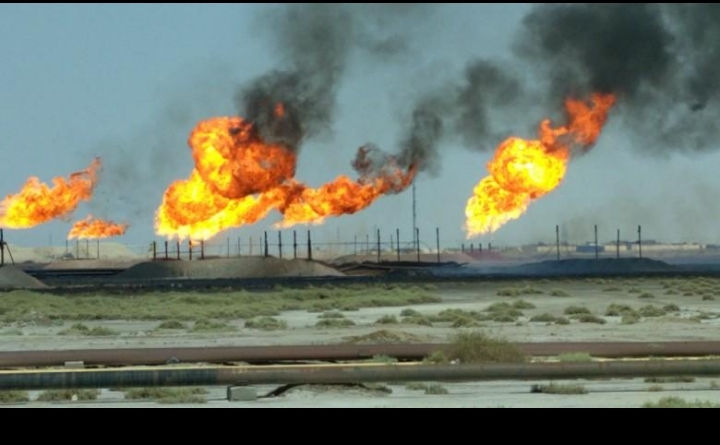
Nigeria Lost $1.5 Billion to Gas Flaring in 2024, Says German Ambassador
Nigeria lost an estimated $1.5 billion in economic value in 2024 due to the continued flaring of natural gas, according to Annett Günther.
Speaking during a fireside session at the Nigeria Oil and Gas Energy Week in Abuja, the ambassador revealed that the country flared approximately 5.3 billion cubic metres of associated gas last year, making Nigeria the seventh-largest gas-flaring nation in the world.
Günther explained that the volume of gas wasted could have generated significant economic benefits if properly harnessed for domestic use and industrial development.
To address the challenge, Germany has introduced a new partnership with Nigeria aimed at converting gas that is currently flared into valuable energy resources. The initiative seeks to channel the gas toward electricity generation, household energy supply, industrial production, and the development of low-carbon hydrogen projects.
According to the ambassador, the programme follows the signing of the 2025 Joint Declaration of Intent on Bilateral Energy Transition Dialogue and Cooperation, a framework designed to strengthen energy collaboration between both countries.
She noted that Germany and Nigeria have maintained an energy partnership since 2008, with several programmes already supporting renewable energy development, energy efficiency, and technical capacity building.
Among these initiatives are the Nigerian Energy Support Programme (NESP), implemented by Deutsche Gesellschaft für Internationale Zusammenarbeit, and the German-Nigerian Hydrogen Office, established in 2021 to promote clean hydrogen opportunities.
The ambassador said the latest collaboration focuses on three major priorities:
Expanding low-carbon energy production and electricity generation.
Developing technical skills and encouraging private sector investment.
Commercialising flare gas that would otherwise be wasted.
Günther added that both countries are working toward ambitious climate goals, with Germany aiming to achieve net-zero emissions by 2045, while Nigeria targets 2060.
She also noted that global energy challenges, including the Russia-Ukraine conflict and instability in the Middle East, have highlighted the importance of diversifying energy sources and improving energy security.
The new flare gas commercialisation project, supported by GIZ, Siemens Energy, and the European Union, will evaluate technical, regulatory, and financing models for capturing gas currently burned off at oil fields.
If successfully implemented, the project is expected to reduce greenhouse gas emissions, improve electricity supply, support industrial growth, create jobs, and generate additional revenue for Nigeria’s economy.
Nigeria flared 5.3 billion cubic metres of gas worth $1.5 billion in 2024 – German Ambassador